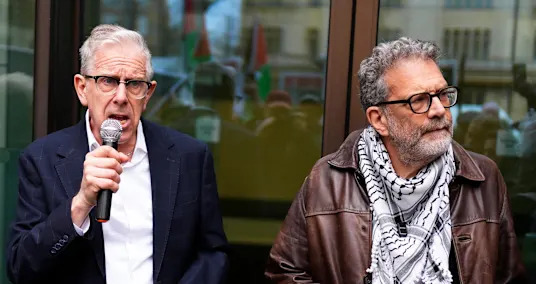
“The IDF needs, more than ever, additional soldiers to carry the heavy burden of defending the state,” the letter said, arguing that mandatory service reflects Israel’s “shared destiny.”
Over 60 mayors and local council heads urged Prime Minister Benjamin Netanyahu, Defense Minister Israel Katz, and Knesset Foreign Affairs and Defense Committee chair Boaz Bismuth to stop the advancement of the latest IDF haredi draft bill, in a Monday letter.
The initiative followed the tabling of the newest draft, which the signatories say will deepen social divides and damage public trust. The letter calls the proposal “a severe blow to mutual responsibility,” and warns that it endangers societal cohesion.
“The IDF needs, more than ever, additional soldiers to carry the heavy burden of defending the state,” the letter said, arguing that mandatory service reflects Israel’s “shared destiny.”
The heads of authorities warned that when some bear the burden, and others are exempt, both security and the sense of mutual responsibility suffer.
The municipal leaders wrote that the current outline “has neither equality nor solidarity,” calling it a danger to Israel’s social fabric that would “deepen the rift between citizens and state institutions.”

They added that the bill would severely erode public trust and risk the willingness of broad communities to continue contributing.
The letter was addressed to Netanyahu, Katz, and Bismuth after the latest version of the bill was placed on the Knesset’s table.
Signatories span major cities and regional councils, including Tel Aviv’s Ron Huldai, Haifa’s Yona Yahav, Herzliya’s Yariv Fisher, Hefer Valley Regional Council’s Galit Shaul, Givatayim’s Ran Kunik, Kfar Saba’s Rafi Saar, Ra’anana’s Haim Broida, Ramat Hasharon’s Yitzhak Rochberger, Hod Hasharon’s Amir Kochavi, and dozens of others from local and regional councils nationwide.
Bismuth advances new haredi draft framework
Bismuth advanced a new haredi draft framework in recent weeks as the coalition seeks to legislate conscription terms for ultra-Orthodox yeshiva students.
Analysts and officials have warned that the plan softens enforcement and will not improve enlistment rates, while the IDF continues to flag acute manpower gaps amid the war.
The bill is the latest attempt to create a permanent legal framework for the enlistment or exemption of haredi men, after the High Court of Justice ruled that the state may not continue granting sweeping exemptions without a clear legal basis and without addressing inequality in conscription.
The draft sets five years of recruitment targets for haredi men, with the first “year” lasting 18 months. The bill also cancels all draft orders issued to haredim since 2023, effectively resetting the system and granting a kind of retroactive “amnesty” to those who received call-up notices under the previous legal vacuum.
A major difference in the Bismuth draft is the removal of any binding quota for combat roles. Earlier outlines had required a fixed percentage of haredi recruits to serve in combat or combat-support units.
Zvika Klein contributed to this report.
latest_posts
- 1
 Germany ready to assist Syria's reconstruction, says foreign minister
 - 2Russia Fields New Ulan-2 All-Terrain Tactical Vehicle
- 3The Secret Destinations Amex Says Will Be More Popular Than Bali by 2026
- 4The Craft of Computerized Detox: Individual Trials
- 5Moon rush: These private spacecraft will attempt lunar landings in 2026



- Metropolitan Greatness: The 6 Urban areas for Quality Living in 2024
- Quantum Computing’s Next Major Breakthroughs Could Come From Australia
- Don't miss these five impressive spots in Bangkok
- PHOTO ESSAY: Summer camp for kids with autoimmune diseases
- Activists guilty over Palestine protest breach
- Iran war drives global fertilizer prices up, raising food cost fears
- Former 'Bachelorette' welcomes 1st baby via emergency c-section
- Bombardier Global 8000 Enters Service
- Two Israeli infants among wounded by shrapnel in overnight Iranian missile barrage